UK Gambling Licensing & Regulation Guide 2026 UKGC Explained
Data provided for a London casino over a four-week period in October 2019 showed a clear correlation between average dwell time and occupancy rates. Evidence suggests that this can make customers who have secured a machine reluctant to take a break as they may be unable to play again. In order to ensure local authorities can continue to carry out their licensing and enforcement duties effectively, we are proposing to raise this cap by either 10%, 20% or 30%. This included a number of measures to adjust outdated regulatory restrictions applying to the land-based gambling sector. The Gambling Act Review white paper published in April 2023 set out the government’s plans for modernising the regulation of gambling in Great Britain.
We do not propose that these machines should be required to be moved to an age-restricted area. We propose to move the voluntary commitment into legislation, introducing a legal age limit of 18 on Category D ‘cash-out’ slot-style machines. In order to future proof the gaming machine industry and adapt to modern payment technologies, we are seeking views on a range of player protections that will ensure players can use modern payment methods whilst mitigating the risk of harm. Without intervention, there is a risk that machines could become obsolete as we move towards a “cashless” society. The white paper proposed to reform the 80/20 rule in response to evidence that the current rule does not allow operators to adequately meet consumer demand, while still providing a balanced product offer to customers.
What does the Gambling Act 2005 cover?
Premises Licenses relate to non-remote businesses and give permission for using facilities to operate as casinos (or for other gambling activity). Furthermore, the UK has specific regulations for remote gambling operators. Covers high street betting shops, casinos, bingo halls and adult gaming centres. Navigate our comprehensive database of Gambling Commission licensed operators, brands and licences For casinos which exercise the extended entitlement and other larger converted casino premises, a new mandatory condition in paragraph 4 of Part 5 of Schedule 1 to the 2007 Regulations requires that the floor area of the gambling area is less than 1,500m². New paragraph 3 of Part 5 of Schedule 1 to the 2007 Regulations attaches additional mandatory conditions to converted casino premises licences that apply only if the holder decides to exercise the extended entitlement.
- Scottish Ministers also have power to set application and annual fees for premises licences, which differ from the fees set out for England and Wales, and are set out in the Gambling (Premises Licence Fees) (Scotland) Regulations 2007.
- Open a review for the detailed test results, or head straight to the casino site.
- It has also meant that none of these casinos are able in practice to satisfy the current conditions which would allow them to offer the maximum number of gaming machines due to the amount of space they take up.
- A premises licence issued by a local licensing authority will however continue to authorise either a ‘small’ or a ‘large’ 2005 Act (opens in new tab) Casino premises.
- The supplementary consultation was shared with all of the initial respondents to the land-based gambling consultation who left contact information, and received 16 responses.
What player protections could be adopted in casinos for those customers participating in sports betting? If you are a casino licence operator, what impact is permitting sports betting expected to have on the Gross Gambling Yield (GGY) of your casino(s)? Should all 1968 Act casinos be permitted to offer sports betting, regardless of size? Therefore, 1968 Act casinos are losing out on potential revenue that might otherwise have been generated if they were allowed to offer sports betting services. Consumers (particularly international tourists) still bet on sporting events via mobile devices while in casinos, irrespective of whether sports betting is permitted or not.
An operating licence allows you to provide gambling activities to customers in Great Britain. That said, established casinos with longer track records give some players extra reassurance. Most of the casinos in this list process the majority of withdrawals within 24 hours.
The Committee of Advertising Practice, which is responsible for penning advertising codes in the UK, announced new rules aimed at protecting children under the age of 18 from content promoting gambling. By 2013, the UK media regulator Ofcom reported that this approach had led to a seven-fold increase in the number of gambling ads that were aired on the TV. The industry recruits staff to target VIPs and get them to spend more, to contact VIPs who have not gambled for some time and get them to restart gambling, to identify less serious gamblers who could become VIPs and get them to gamble more. In July 2026, the UK changed how gambling penalties would be collected and allocated. The betting industry alone is reported to contribute £6 billion as of January 2010, 0.5% of GDP. Publicans must also be vigilant in ensuring that their customers do not pass betting slips between each other but only bet for themselves.
It also lists premises that are subject to an application to vary the licence (shown as ‘VARIATION’). The Gambling Commission licenses and regulates gambling operators in Great Britain. It depends on your preferences, but according to our experts the top online casino in the UK for August 2026 is Duelz. So, even if you link a credit card to your PayPal account, using it to deposit at casinos is still blocked under the UKGC ban, even indirectly through e-wallets.
We can also analyse average loss and session length data to consider the possible risks of gambling harm for those customers who increase their gambling participation as a result of these measures. Notably, these rates are below the at-risk and problem gambling rates for casino table games (31.5% and 6.4% respectively). • Any non-gambling area may consist of one or more areas within the premisesDo you agree that this should remain the same under the new regime? It is for the Scottish Ministers to consider whether they want to amend the Mandatory and Default Conditions that apply to casinos located in Scotland. Therefore, we would welcome any responses which highlight concerns about this approach and how non-gambling areas could be calculated using a different method.
If you are worried about your gambling or that of a friend visit gambleaware.org. City AM is committed to responsible gambling. If you are trying a newer site, check for the UKGC logo in the footer and verify the licence on the regulator’s website. Yes, provided it holds a UKGC licence. The better UK casino sites display RTP clearly within each game’s information panel. Withdrawal times vary by casino and payment method.
The most important factor is a valid UK Gambling Commission licence, which you can verify on the UKGC website. Most operators allow you to browse the lobby without creating an account, which gives you a sense of how the interface performs. Mobile-optimised websites accessed through a browser are the more common approach among newer operators. Knowing what to look for protects both your money and your personal data. Signing up at a UKGC-licensed casino is a straightforward process.
If more applications are received than the number of available licences, the authority must determine whether each application would be granted a licence if there were no limit on the number of licences that the authority could grant. Authorities should think carefully before entering into any agreements or arrangements with potential casino operators which might be perceived to affect their ability to exercise their stage two functions objectively and without having prejudged any of the issues. However, the law does not prevent unlicensed casinos such as Stake – and a host of other brands that chiefly target football viewers in east Asia – from sponsoring British clubs.
However, where a converted casino premises seeks to utilise the extended gaming machines entitlement, it will need to vary its premises licence to show the table gaming area on the plan, whether or not there are changes to any other part of the premises used for gambling or the non-gambling area. In addition, Small 2005 Act casinos which take advantage of the new machine to table ratio, and/or the reduced minimum table gaming area, will also need to apply to their local licensing authority to vary their premises licence, given the changes in non-gambling and gambling areas. Other use of premises to legally provide gambling facilities, such as authorisations for alcohol licensed premises, clubs and miners’ welfare institutions, and family entertainment centres (for those with Category D gaming machines only), do not need a premises licence. In cases where providers perform several types of gambling activities (e.g., casinos + gaming machines), they need to apply for separate licenses. This includes online casinos, sports betting sites, bingo operators and land-based gambling premises.

Anti-money laundering regulations
Holders of personal licences will be required to pay a fee every five years to maintain their licence11. However, as indicated previously, by virtue of section 125 of the Gambling Act 2005 (opens in new tab), non gamestop casinos in the context of an application for an operating or personal licence, the Rehabilitation of Offenders Act 1974 does not apply to a ‘relevant offence’. For operating licence applications, the Commission will ask for accounts from existing businesses or financial projections where the applicant is a new business. The Commission will not grant an operating licence until it is fully satisfied that the operation will not be financed by the proceeds of crime and that profits from the operation will not be used to finance criminal activity. The persons considered relevant may vary depending on the information provided in the operating licence application and on company structure, but are likely to exercise a function in connection with, or to have an interest in, the licensed activities.
Responses from industry advocated for either no increase in the maximum chargeable premises fees or a small increase of 10%. A key stated benefit was the ability to undertake more proactive engagement and enforcement activities with licensed premises. Licensing authorities highlighted numerous benefits which would be achieved by increasing the maximum chargeable premises fees by 30%. However, a number of these responses stated that this would still be below the amount necessary to undertake their duties to the fullest extent. The majority of licensing authorities advocated for a 30% increase.
In the 2024–25 reporting year, 156 new operating licence applications were submitted and 75% were processed within 16 weeks. The Advertising Standards Authority (ASA) regulates gambling advertising, though LCCP breaches by licence holders are enforced by the Commission itself. The most recent significant RTS update came into effect on 17 January 2025, extending requirements previously applicable only to slots to a wider range of online casino products.
These responses primarily came from small businesses who supplied tablet gaming machines to the market. Responses stated that the commercial flexibility permitted by Option 2(b) would enable bingo operators to reduce the number of Category C and D gaming machines which they make available, while making slight increases in the number of Category B cabinet gaming machines. One operator, under both options, stated that it would increase the number of Category B cabinets machines by 2 to 3 per venue, while removing the vast number of smaller in-fill gaming machines. In regards to the second objective, under Option 3, the evidence provided suggests that over time it is likely that many operators would reduce their offer of Category C and D cabinet gaming machines substantially and offer predominantly Category B cabinet gaming machines. The first is to ensure that operators benefit from commercial flexibility to increase GGY through the ability to make more Category B machines available and/or reduce their energy costs through the removal of underused Category C and D gaming machines. Under Option 1, we received responses from industry which suggested that only slight increases in Category B gaming machines would be made.
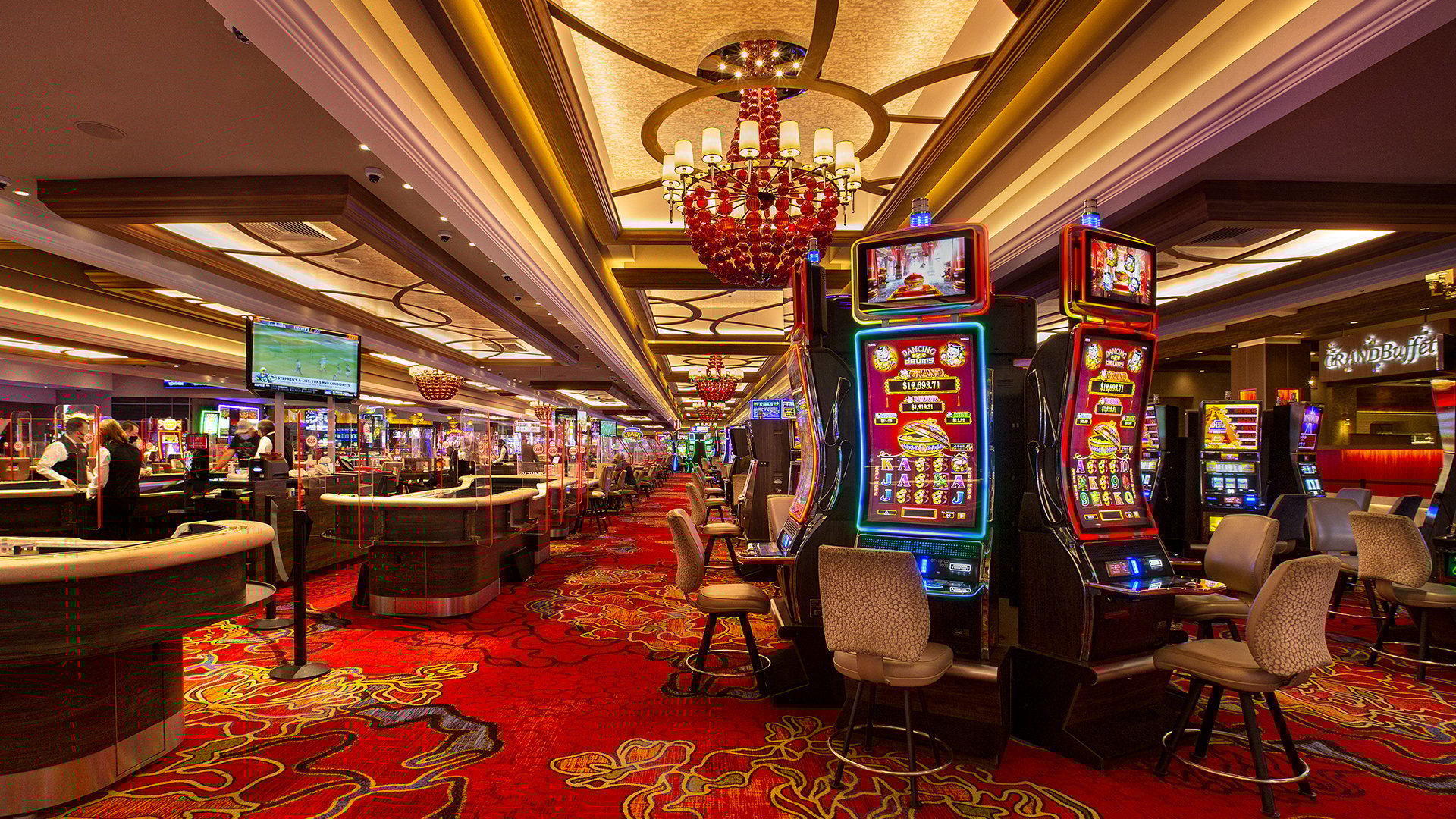
The Gambling Commission has raised concern that some of these machines appear to have been designed primarily to maximise the number of Category B cabinet machines which can be sited by an operator, rather than to provide a genuine lower stake gambling offer to customers. However, to mitigate against gambling-related harm, the reform of the rule also seeks to ensure that a genuine offer of lower staking Category C and D machines remain available for customers. Additionally, the reform seeks to allow operators to reduce their energy costs through the removal of unused but energy intensive Category C and D machines and/or increase GGY through increased numbers of higher yielding Category B machines. Some operators were keen to highlight the increasing cost burden for land-based casinos in other areas, but acknowledged the logic of applying consistency across regimes.

Eligibility for a British gambling licence depends upon the Gambling Commission’s assessment of a variety of factors, primarily the integrity and probity of the applicant and the applicant’s ability to conduct gambling in a solvent and responsible manner in compliance with law and regulation. Free-to-play casino games with prizes are regulated by the Gambling Commission (licence required). Casino gaming (including slots and casino table games such as roulette & blackjack)

If a game developer provides its games to a UK online casino then it must have its own UKGC licence, with software complying to strict standards as well as many required features incorporated into each game. However online casinos do have to operate fairly and adhere to a very strict code of conduct and should pay out withdrawals without long waiting times. This isn’t a legal requirement of the UKGC licence and the gambling laws in the UK don’t set a specific time frame for a casino to pay out winnings. One of the UKGC’s main objectives is to protect and help vulnerable casino players and the organisation sets out very strict guidelines for casinos in the UK to adhere to, which include gaming limits, time out periods and self exclusions for players. If you play at a casino with a UKGC licence then you can expect to have verification checks carried out using your basic details when you first open your account, the UKGC implemented these checks to help prevent underage gambling. If you are looking for a casino with a safe and fair gaming environment, these casinos are the choice for you as player safety and game fairness are never jeopardised.
How casinos handle issues says a lot, so we test response times and how helpful support actually is. We only feature licensed and regulated UK online casinos that meet the modern standards for fair and safe play. At online-casinos.co.uk, we’ve been helping potential UK players find the best online casinos since the dial-up days. Looking for the best online casinos in the UK?
The policy proposals set out in this government response are intended to modernise the land-based gambling sector and help it to thrive sustainably. In addition, operating costs have risen significantly over this period, especially as a result of rising energy costs, which have increased by over 225% for some operators. The land-based gambling sector, unlike the online gambling sector, has faced significant challenges in recent years as a result of business inactivity during periods of COVID-19 restrictions. In September 2019, the Gross Gambling Yield (GGY) generated by remote gambling overtook that of land-based gambling for the first time (excluding lotteries). The white paper acknowledged that the emergence of new technology and the availability of online gambling since the Gambling Act 2005 came into force has substantially altered the gambling landscape. Measures relating to casinos – one draft affirmative and one made negative statutory instrument.